
Celebrating World Oceans Day Through Action: UBC And Skipper Otto Reimagine Seafood Systems Together
NewsEvery year on World Oceans Day, we’re reminded that the future of our oceans depends on the choices we make today. That’s why we’re so excited to celebrate our partnership with UBC Food Services, a collaboration that’s helping demonstrate what a better seafood system can actually look like in practice!
 by Sonia Strobel

Every year on World Oceans Day, we’re reminded that the future of our oceans depends on the choices we make today. But real change requires more than awareness: it requires action.
That’s why we’re so excited to celebrate our partnership with UBC Food Services, a collaboration that’s helping demonstrate what a better seafood system can actually look like in practice!
Over the past year, UBC and Skipper Otto have worked together to bring responsibly harvested, fully traceable wild salmon to students on campus while directly supporting fishing families in coastal, rural, and Indigenous communities in BC.
Together, we’re proving something important: that a better seafood system isn’t just possible. It’s already happening.
A Different Way Forward
For decades, seafood systems have prioritized efficiency and scale, often at the expense of transparency, ecosystem health, and the long-term wellbeing of fishing communities. At Skipper Otto, we’ve spent the past 18 years building a different model.
What began with one fishing family has grown into a national network supporting 70 small-scale independent harvesters across Canada. By connecting people directly with the harvesters who catch their seafood, we help ensure more value stays in fishing communities while giving members full transparency around where their seafood comes from and who caught it.
Seafood is never just seafood; it’s always connected to ecosystems, livelihoods, cultures, and communities. And when institutions begin to see procurement not just as purchasing, but as a tool for systems change, an entirely different set of possibilities emerge.
Why UBC's Leadership Matters
As a two-time UBC graduate myself (BA ’98, BEd ’04), this partnership feels especially meaningful. I’m incredibly proud to see my alma mater willing to think boldly and critically about how its purchasing decisions affect communities, ecosystems, and the future of food systems!
Chef David Speight and the UBC Food Services team understand that institutional procurement can do more than meet budget targets. It can help create positive social, environmental, and economic outcomes at the same time. “We’re at a place of learning …Our customers are primarily between the ages of 18 and 22; they’re making food choices, perhaps on their own for the first time. So we believe we have a role to play in educating them around sustainable food choices… choices that we hope will last a lifetime”.
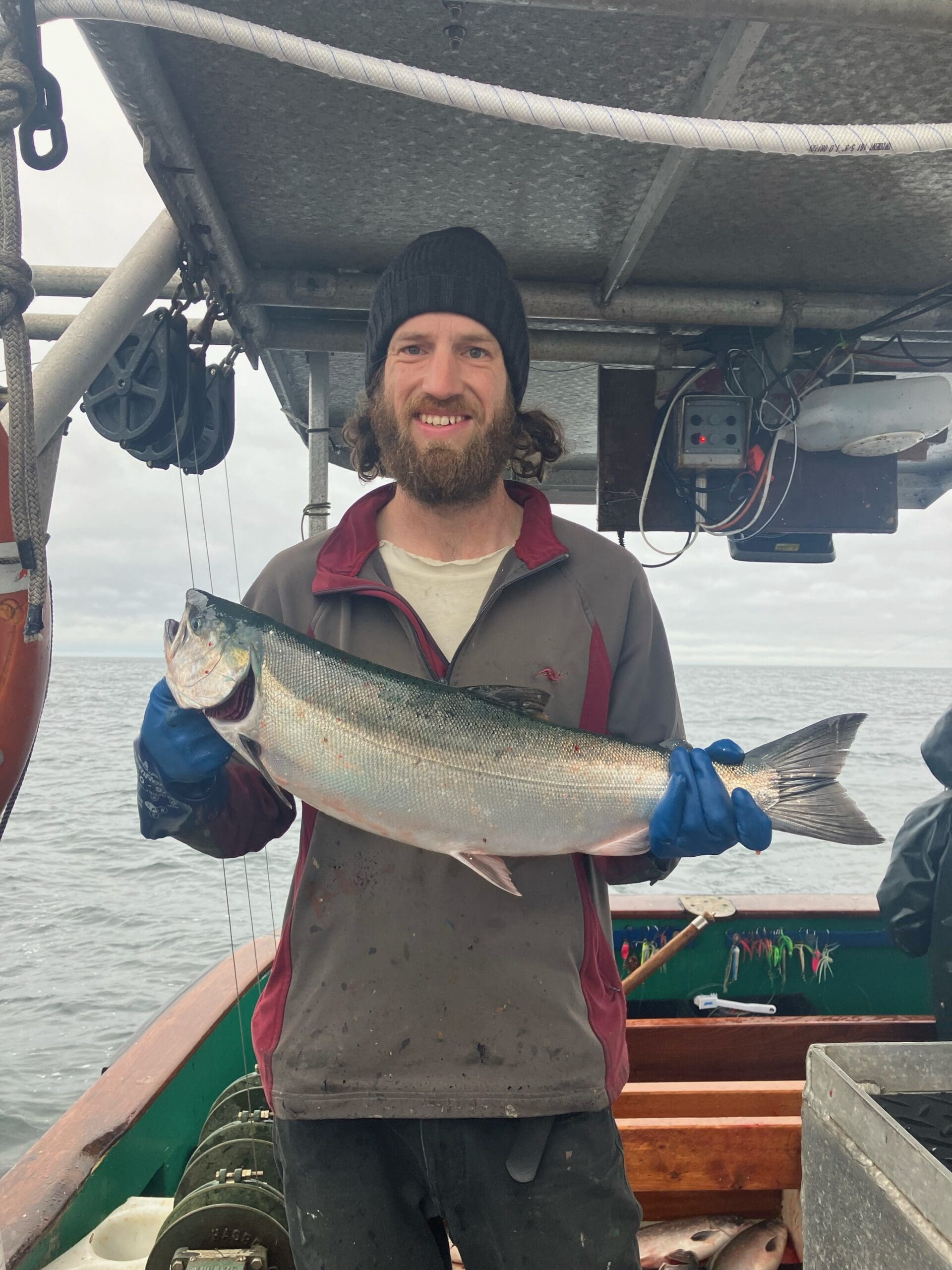
And importantly, UBC was willing to prove it. Over the past year, UBC sourced nearly 7,000 pounds of wild salmon through Skipper Otto’s, committing to quantities ahead of the season and paying a deposit just like our traditional members do. In this way, UBC directly supported 12 small-scale fishing families while bringing responsibly harvested sockeye, coho, and chinook salmon to campus dining halls, each case of salmon coming with the photo and story of the person who caught it. And now, in 2026, they’ve signed on to support our fishing families for another fishing season.
These aren’t symbolic gestures. They’re real purchasing decisions creating real measurable impact.
Healthy Oceans Need Healthy Communities
Too often, conversations about ocean sustainability focus only on environmental conservation while overlooking the people whose lives, cultures, and futures are deeply connected to the water. But healthy oceans and healthy coastal communities go hand in hand. When fishing families can make a viable living, they can continue stewarding marine ecosystems, passing knowledge to future generations, and maintaining ways of life that have sustained communities for generations. This is especially important in Indigenous communities, where fishing is deeply connected to cultural continuity, food sovereignty, and relationship to place.
Building better seafood systems means moving beyond extractive models and toward systems where harvesters themselves retain greater visibility, participation, and economic benefit within the supply chain. That work requires humility, listening, and long-term relationship building. UBC’s commitment to that kind of purchasing relationship is proof that meaningful change is possible.
A Model Worth Expanding
One of the most exciting parts of this partnership is that it proves institutions really can align their purchasing practices with their values. Public institutions regularly speak about sustainability, reconciliation, climate leadership, and community wellbeing. Procurement is one of the clearest opportunities to put those commitments into action. UBC showed leadership by being willing to try something different and demonstrate that it works. “We just did something completely different…something that we haven’t done at UBC before. We projected our velocities and sourced products [Skipper Otto] could supply. We paid for 50% up front to guarantee that revenue for [the] fishing families, and paid the rest as it came through. I think it is so special, it worked really well on our end… and it shows that business can be done differently”. Now that UBC has set the stage, we’re hopeful that this partnership encourages other universities, hospitals, and institutions to ask an important question: What kind of food system are our purchasing decisions helping create?
Protecting our oceans isn’t separate from supporting fishing communities, strengthening local economies, or building more resilient food systems. These things are all connected. And together, we have the power to build something better.